Bob

Connecting the Individual and Universal

I appreciate everyone participating in this new format and welcome to everyone coming for the first time.  We are working to keep our regular class schedule going so it will be easier to return to our training together.

Please share any comments, suggestions or questions.

This difficult time; while we wish it was not going on, is an opportunity to deepen our practice by appreciating what is really important to us and what we can let go of-The Heart of Aikido translated by John Stevens (pgs. 42-43).

Introduction

In our last on-line class we continued our series of broadening our focus from the individual harmony of the I and the unit to a more universal perspective and experience of the I and the unit.

One reason that this shift from the personal to the universal is especially valuable at this time is the world’s unified focus due to the virus.

O Sensei repeatedly referred to human beings as mirrors of the cosmos. 

Practices are needed that provide both an individual and universal experience and that also include both growth and development and balance and harmony.  This is because the individual and the universal complement (mirror) each other.

This understanding allows us to take O Sensei’s Dragon King Formulation from the realm of esoteric Shinto tradition into both a general understanding and much more importantly, a universal and REPEATABLE experience of I and unit.

Many spiritual traditions teach that the creation is made up of two fundamental energies, for example yin and yang or in and yo in Japanese. 

O Sensei often talked about the two basic universal energies symbolically manifested as fire and water.  Fire and water are used in this same way in many traditions that practice inner alchemy such as Taoism and certain schools of Buddhism.  We have used the same formulation in our forging practice for many years.

Today’s class will build on our earlier classes in this series and begin to connect the individual and universal perspectives.  Our goal is a practice that honors both perspectives in a unified experience. 

We will start with our standard forging practice on an individual level to get an experiential base for the interaction of fire and water.

Then we will use the basic questions with which we started in our earlier classes to expand our perspective from the individual to the more universal. 

Our Aikido technique for today will be mune-tsuki irimi nage.

Let’s bow in and start with misogi breathing and a good full warm-up.

Five Principles for Ki Breathing

Breathing tip of the day

Our tip today on the misogi breathing is to visualize exhalation as an outreach to the universal experience and the inhalation as bringing that universal experience back to you as an individual. 

  1. Breathe out with the sound of HA, don’t let your breath just leak out
  2. Breathe out as calmly and quietly as possible
  3. Breathe out the Ki of your head to the Ki of your toes
  4. Breathe in from the tip of your nose until your body is full of air
  5. Calm your mind infinitely smaller at the one point after inhaling  
  1. Let’s begin with a round of practice with the technique.
  • Begin with the practice on mune-tsuki irimi nage.
  • Get feedback on the technique to establish a baseline to use for comparison as the practice progresses.

                Bridging the Universal and the Individual

  1. Let’s begin with a basic round of forging at the individual level. Our call off is mune-tsuki irimi nage.  We will then move to an alive space; an embodied functioning unit of the technique and the wholeness of the I.  Let’s pay special attention to balanced mixing of the energies of the unit.  At a more universal level this is the job of the Dragon King/Queen.

Now that each part of the system has had a turn on the lineage established by the technique; in the space; I and unit come together at hara.  One becomes fire and one becomes water. 

Through the interaction of fire and water with each other, at hara, a refined steam like energy fills your entire system with a sense of health and wholeness; aliveness and wellbeing and brings all the parts of your system together birthing you as the forged one of mune-tsuki irimi nage. 

  • Let’s return to the technique to see how this round of forging, at an individual level, has enhanced our performance of the technique.
  1. Let’s now go through the forging process on a more universal level. Our call-off with mune-tsuki irimi nage can move from an individual Aikido technique to standing on the floating bridge of heaven, Ame-no-murakumo or the Billowing Clouds of Heaven.  We can follow the same basic technique we have just used in our regular forging practice by visualizing from both the awareness and experiential perspectives how we will look and feel standing on the floating bridge.  Since this is a big shift from individual to universal, we can use the mountain echo to help us make this move.


  1. We can then continue on to the alive space with again the same practice we use in our regular forging practice-center and circle interacting with each other but on a universal level. We can also use the mountain echo to help us here. 
  1. Let’s now turn our attention to the mixing of the universal unit, the Dragon King/Queen. The energies of the unit are Kuki, the Nine Fierce Spirits.  Here we will use the kuji kiri practice we learned from Stevens Sensei.  This will be instructed orally and not be in the notes or on the video.  We will go through the kuji kiri three times.  Our objective and hoped for result is to bring the energies of the Kuki, the Nine Fierce Spirits together into a unit of universal perspective.  This universal unit will have all the skills and abilities needed to allow us to stand on the floating bridge of heaven.

What is your experience as the Dragon King/Queen?  While we are seeking the experience of a universal unit, the experience is still you.  Each person’s experience even on a universal scale will be unique.

As in previous classes you don’t have to know the answer in advance, allow the principle of the mountain echo to work.  Maintain a fullness and presence and allow the answer to form experientially.

This type of universal practice can be especially useful in times of turmoil either personally or in society. 

It is at these times that the energies can indeed turn fierce and seem like chaos rather than orderly creation is inevitable.     

  1. The next step in our process of universal forging is to experience the I or Haya-Takemusu-Okami-Swift Valorous Creative Spirit as the most original I. We will as we have throughout this class use the same practice of each part of the I mirroring its other half to bring about an experience of wholeness on a universal scale. 

Our question here remains what is the experience of each part of the I mirroring its other half on this most original level?  Once again as this is a big step, use the mountain echo practice to help you make this big move.

What is your experience as the most original I?

  1. Let’s now complete the forging process. On this universal scale; on the lineage of standing on the floating bridge; in the universal space; as the Dragon King/Queen; experiencing ourselves as the most original I; I and unit come together. 

One becomes fire, one becomes water and through the interaction of fire and water with each other at the universal center of SU the most refined energy fills your system with an experience of health and wholeness, wellbeing and aliveness and birthing you as the forged one standing on the floating bridge.

What is your experience as the forged one standing on the floating bridge?

  • Let’s go back to mune-tsuki irimi nage and to experience the technique on this universal scale.
  1. Let’s now complete our practice by bringing the universal and individual together into a unified experience. A question that can help us is:  how do the universal and the individual come together as a unified whole?  As we have with previous major shifts in consciousness allow the mountain to operate and let the answer grow organically in your system.

What is you unified experience of wholeness between the universal and the personal?  More on this in our next class.

Conclusion

This series of classes is designed to help broaden our perspective from individual harmony to a more universal harmony with the great energies of creation.  The unit and the forged one that comes out of this broader perspective will be more universal in scope. 

In this class we continued our practice of individual and universal consciousness but also began a process of unifying them. 

We will focus more on this unifying practice in our next class.

Feedback and discussion.

The Heart of Aikido translated by John Stevens (pg. 46).

Practice before next class

Repeat this practice using a daily life task as your call-off and allow time to bring the universal and personal together. 

Finish with misogi breathing and bowing out.

Forging a Universal Unit and I With the Fire Water Energies of the Universe

I appreciate everyone participating in this new format and welcome to everyone coming for the first time.  We are working to keep our regular class schedule going so it will be easier to return to our training together.

Please share any comments, suggestions or questions.

This difficult time; while we wish it was not going on, is an opportunity to deepen our practice by appreciating what is really important to us and what we can let go of-The Essence of Aikido by John Stevens (pgs. 33-34).

Introduction

In our last two on-line classes (one on Saturday due to poor air quality from the fires-for which there are no class notes) we began a series broadening our focus from the individual harmony of the I and the unit to a more universal perspective and experience of the I and the unit.

One reason that this shift from the personal to the universal is especially valuable at this time is the world’s unified focus due to the virus.

In the quote we just heard O Sensei talked about what in our forging practice we call the I and unit.  The most original I he referred to as Haya-Takemusu-Okami-Swift Valorous Creative Spirit.  This is the I at a level of universal or most original consciousness.

The universal unit he called Ryuo-the Dragon King.  The energies that mixed up the universal unit he named Kuki-the Nine Fierce Spirits.  Nine is a version of three which is a number of change and growth that can be a harmonious agent for change or a force for chaos.  This depends on our ability to mix a functioning unit as opposed to contributing to chaos and disarray.  The numbers two or four are numbers of stability and balance.  Both types of numbers are needed for growth to occur but in a balanced way. 

What we refer to in our forging practice as the space he calls Samuhara the Cold Plain.  All the elements in our forging practice are represented in this seemingly cryptic ancient Shinto formulation but on a universal rather than a personal level. 

O Sensei repeatedly referred to human beings as mirrors of the cosmos.  Practices that provide both an individual and universal experience of growth and development as well as balance and harmony are needed because the individual and the universal complement each other.

This understanding allows us to take O Sensei’s formulation from the realm of esoteric Shinto tradition into both a general understanding and much more importantly, a universal and REPEATABLE experience of I and unit.

Many spiritual traditions teach that the creation is made up of two fundamental energies, for example yin and yang or in and yo in Japanese. 

O Sensei often talked about the two basic universal energies as symbolically manifested as fire and water.  We have used the same formulation in our forging practice for many years. 

We will start with our standard forging practice on an individual level to get an experiential base for the interaction of fire and water.

Then we will use the basic questions with which we started in our earlier classes to expand our perspective from the individual to the more universal. 

Our Aikido technique for today will be ten-chi nage, the heaven and earth throw.

Let’s bow in and start with misogi breathing and a good full warm-up.

Five Principles for Ki Breathing

Breathing tip of the day

Our tip today on the misogi breathing is to visualize ourselves as being the center of the two universal energies, in this case exhalation and inhalation. 

  1. Breathe out with the sound of HA, don’t let your breath just leak out
  2. Breathe out as calmly and quietly as possible
  3. Breathe out the Ki of your head to the Ki of your toes
  4. Breathe in from the tip of your nose until your body is full of air
  5. Calm your mind infinitely smaller at the one point after inhaling  
  1. Let’s begin with a round of practice with the technique.
  • Begin with a round of practice on ten-chi nage.
  • Get feedback on the technique to establish a baseline to use for comparison as the practice progresses. 

Fire and Water Forging a Universal I and Unit

  1. Let’s begin with a basic round of forging at the individual level. Our call off is ten-chi nage.  We will then move to an alive space; an embodied functioning unit of the technique and the wholeness of the I.  Let’s pay special attention to balanced mixing of the energies of the unit.  At a more universal level this is the job of the Dragon King/Queen.

Now that each part of the system has had a turn on the lineage established by the technique; in the space; I and unit come together at hara.  One becomes fire and one becomes water.  Through the interaction of fire and water with each other, at hara, a refined steam like energy fills your entire system with a sense of health and wholeness; aliveness and wellbeing and brings all the parts of your system together birthing you as the forged one of the ten-chi nage. 

  • Let’s return to the technique to see how this round of forging, at an individual level, has enhanced our performance of the technique.
  1. Let’s now go through the forging process on a universal level. Our call-off with ten-chi nage can move from an individual Aikido technique to standing on the floating bridge of heaven Ame-no-murakumo or the Billowing Clouds of Heaven.  We can follow the same basic practice we use in regular forging practice by visualizing from both the awareness and experiential perspectives how we will look and feel standing on the floating bridge.  Since this is a big move from individual to universal, we can use the mountain echo to help us make this move.
  1. We can then continue on to the alive space with again the same practice we use in our regular forging practice-center and circle interacting with each other on a universal level. We can also use the mountain echo to help us here. 
  • Now let’s take a little breather here and return to the technique and see how this partial universal forging is reflected in your technique?
  1. Let’s now turn our attention to the mixing of the universal unit, the Dragon King/Queen. The energies of the unit are Kuki, the Nine Fierce Spirits.  Here we will use the kuji kiri practice we learned from Stevens Sensei.  This will be instructed orally and not be in the notes or on the video.  We will go through the kuji kiri three times.  Our objective and hoped for result is to bring the energies of the Kuki, the Nine Fierce Spirits together into a unit of universal perspective.  This universal unit will have all the skills and abilities needed to allow us to stand on the floating bridge of heaven.

What is your experience as the Dragon King/Queen?  While we are seeking the experience of a universal unit, the experience is still you.  Each person’s experience even on a universal scale will be unique.

As in previous classes you don’t have to know the answer in advance, allow the principle of the mountain echo to work.  Maintain a fullness and presence and allow the answer to form experientially.    

  • Now let’s return to the technique and see how this practice has impacted our experience of the technique. What is its more universal manifestation?
  1. The next step in our process of universal forging is to experience the I or Haya-Takemusu-Okami-Swift Valorous Creative Spirit as the most original I. We will as we have throughout this class use the same practice of each part of the I mirroring its other half to bring about an experience of wholeness on a universal scale.  Our question here remains what is the experience of each part of the I mirroring its other half on this most original level?  Once again as this is a big step use the mountain echo practice to help you make this big move.

What is your experience as the most original I?

  1. Let’s now complete the forging process. On this universal scale; on the lineage of standing on the floating bridge; in the universal space; as the Dragon King/Queen; experiencing ourselves as the most original I; I and unit come together. 

One becomes fire, one becomes water and through the interaction of fire and water with each other at the universal center of SU the most refined energy fills your system with an experience of health and wholeness, wellbeing and aliveness and birthing you as the forged one standing on the floating bridge.

What is your experience as the forged one standing on the floating bridge?

  • Let’s go back to ten-chi nage and to experience the technique on this universal scale.

Conclusion

This series of classes is designed to help broaden our perspective from individual harmony to a more universal harmony with the great energies of creation.  The unit and the forged one that comes out of this broader perspective will be more universal in scope.  In this class we used a formulation directly from O Sensei to help us experience universal consciousness directly and in a functional manner. 

In the classes that follow we will work through this process to help make it a little more familiar and repeatable.  I am indebted to Jack Wada Sensei for making this connection to the Dragon King as one of O Sensei’s universal manifestations.

Feedback and discussion.

The Secret Teachings of Aikido translated by John Stevens (pg. 127).

Practice before next class

Repeat this practice using daily life task as your call-off. 

Finish with misogi breathing and bowing out.


Fullness of the Unit and the I At Moments of Change and Opportunity

I appreciate everyone participating in this new format and welcome to everyone coming for the first time.  We are working to keep our regular class schedule going so it will be easier to return to our training together.

Please share any comments, suggestions or questions.

This difficult time; while we wish it was not going on, is an opportunity to deepen our practice by appreciating what is really important to us and what we can let go of-A Life in Aikido by Kisshomaru Ueshiba (pgs. 177-179).

Introduction

In our last on-line class we continued our series on dealing with challenging situations from a place of wholeness. We also continued to practice using the energies that correspond to that situation to mix up a functional unit that can work effectively with challenging situations.  We advanced our practice to experience at a deeper level than in our previous classes the energies of the unit being free of even subtle entanglement with the I. 

We also focused on avoiding a shift to the I, which can create movement toward fragmentation, when we encounter obstacles to working with challenging situations.  An important part of our practice is to gain the ability to clear entanglements resulting from trying to reproduce a hoped for or previously remembered experience.  Effective clearing allows us to approach each situation from a fresh and creative perspective.  O Sensei called this Takemusu.  The result is a unit capable of precisely functioning in the situation with which we are currently interacting.

Our goal with this series is to strengthen our ability to respond to our daily life situations from a place of wholeness rather than fragmentation.  When we engage with challenging activities, either because they are difficult or ones for which we feel enthusiasm, the I can react in ways that can cause internal conflict and other forms of difficulty. 

One example is the mind of I separating itself from the body of I and getting entangled with the unit.  A second example is the body of I pulling in and separating itself from the mind of I with the resulting absence of grounding and support for the mind of I.  In a previous series of classes a few years ago we called this movement towards fragmentation the flash response.

The second element in this series is to recognize the presence of an energy “pool” which may be the source of the situation when it is internally or voluntarily initiated by us.  The energy pool may also come about as a natural response to provide the energy we need to effectively work with a situation that is generated externally.  O Sensei and many other spiritual traditions teach it is a universal law that we are provided with the energy needed to deal with difficulties when a challenging situation presents itself.

Our goal when we sense the push from the energy pool is to recognize it as an opportunity to allow the energy to create a unit.  We are creating a unit capable of responding from a place of wholeness and inner harmony rather than fragmentation and internal conflict. 

Our shorthand name, borrowing from Nadeau Sensei, for this moment of recognition is a doorbell. Our goal is to recognize the doorbell as a signal not to entangle or withdraw but as an opportunity to reinforce the inner relationship between the two parts of the I and to allow the energies generated by the situation to mix a unit that can respond effectively.

Today we will continue our focus on these two specific areas of practice.

Focus

Enhancing the unit

First, to sense at a more subtle level than we have so far when we mix a unit, that the energies go to the unit and don’t “move over” in a way that disrupts the inner harmony of the I.  This kind of drift can happen when there is remaining entanglement at a subtle level between the I and the unit. 

If we can experience this when the unit is being mixed we can redirect the energies back to unit.  This both strengthens the unit and further reduces the potential for fragmentation within the I.

Working with a challenge

Second, when a difficulty presents itself that interferes with our performance, we want to avoid shifting our attention from the unit to the I.  This can cause the I to tighten up and move again toward fragmentation as the I attempts to remedy the situation.  What is understandable frustration when we meet obstacles, can result in the I tightening, fragmenting and entangling with the unit. 

Like our overall approach to the flash response, the sooner we can detect this movement away from wholeness and functionality the easier it is to avoid or reverse it.  Clearing, when we sense this tightening, is a way to avoid the entanglement that can result when we meet obstructions.

Our Aikido technique for today will be katate-dori kokyu nage.

Let’s bow in and start with misogi breathing and a good full warm-up.

Five Principles for Ki Breathing

Breathing focus of the day

Our tip today on the misogi breathing is to feel the two sides of the body coming together centered on the spine as you are inhaling and then exhale from that centered spinal focus. 

  1. Breathe out with the sound of HA, don’t let your breath just leak out
  2. Breathe out as calmly and quietly as possible
  3. Breathe out the Ki of your head to the Ki of your toes
  4. Breathe in from the tip of your nose until your body is full of air
  5. Calm your mind infinitely smaller at the one point after inhaling 
  6. Let’s begin with a round of practice with the technique.
  • Begin with a round of practice of katate-dori kokyu nage.
  • Get feedback on the technique to establish a baseline to use for comparison as the practice progresses.

 Fullness of the Unit and the I At Moments of Change and Opportunity

  1. As we focus our attention on the technique as our situation of the moment, let’s reinforce the relationship of inner harmony between the two parts of the I. We want to perform the technique as well as we can and with a high degree of personal satisfaction.  If the I becomes fragmented in that effort, we will not be able to achieve either good performance or personal satisfaction.  Before going back to the technique let’s practice mirroring between the parts of the I to experience inner harmony as being more attractive than the tendency toward the flash response.  This may seem like an easy choice in the abstract but we live and make choices in the moment not in the abstract. 


Related to this is trying to experience the movement within the I toward fragmentation as close to its starting point as possible. 

This makes the movement toward wholeness easier because the movement toward fragmentation hasn’t gathered very much momentum.  The less momentum toward fragmentation the easier it is to reverse it and move toward wholeness. 


Our more basic goal is to train the I so that increasingly the movement toward wholeness is our initial response.  Then we don’t have to reverse the movement toward fragmentation.  Perfection in this is probably not attainable but a percentage improvement may be.

  • Let’s return to the technique to see if the mirroring practice we just did is helpful. If not we can repeat the practice or work even more deeply with the I if necessary.
  1. Now let’s put our attention on the pool of energy that corresponds to the technique/situation on which we are currently focused. The energy is freely available to mix up a unit with the functional capacity to perform the technique effectively.  This mixing process is the same one we use in our forging practice.

Let’s use the four count process we practiced in our classes on the Unit.  Count one is the idea or blueprint.  Count two is the structure or implementation of the idea count.  This count provides the framework and support needed to implement the idea.  In the absence of count two, the idea count is asked to do both jobs and often doesn’t have the energy to accomplish both tasks.  Count three is the intuitive element or spirit of the technique.  It provides the poetry or artistry that allows the technique to rise above basic functionality.  Count four is the organizing principle which brings the other three counts and count four itself into a unified functioning whole.  Let’s take our time here and allow each count a full turn.

  1. Let’s then do a second round of 4 counts this time paying special attention to the energies staying with the unit and not moving over and disrupting the internal harmony of the unit. At the same time we want to pay attention to the tendency of the I to entangle with the energies whose purpose is to mix up a functioning unit that is a balanced partner with the I but is not entangled with the I. 
  • One additional practice is to work with an inner dialog between parts of the unit to see if there is any internal conflict which may interfere with the unit’s functional capacity. Once the mixing and jelling has come together into an embodied functioning unit of katate-dori kokyu nage we can go back to the technique and see if it has helped improve our performance and personal satisfaction.
  • Now let’s return to the technique and see if the unit practice we just did is helpful. If not we can repeat the practice or work more deeply with the unit if necessary.

One of our basic goals in the practice of Aikido is to seek opportunities for continuing to grow and development.  Working with the four count process we just practiced presents us with just such an opportunity.  Looking back at the four counts we just experienced, let’s ask the question are there one or more counts that could benefit from some additional attention?  For example, is one of the counts, say count three of the not so obvious, is a little behind the others in fullness of expression? 

This is not an exercise in self-criticism but openness to an opportunity for growth and development through fine tuning of our mixing of the unit.  Once you have identified a count that will benefit from additional help, let’s give it a moment of your full attention. 

One way to work with the count is to treat it like a part of yourself that can engage in an inner dialog with the rest of you.  This can take the form of a question:  what will help you (the count that is behind) to feel more balanced and integrated with the other counts?  Using O Sensei’s principle of the mountain echo (the yamabiko), maintain a sense of fullness and presence and wait for the returning echo to provide what is needed to achieve the greater degree of balance and integration you are looking for. 

  • Now let’s return to the technique and see if the fine tuning of the unit practice we just did is helpful. If not we can repeat the practice or work more deeply with the unit if necessary.
  1. Let’s now intentionally increase the intensity of the practice by asking the question: if I have gotten what I can from this level of practice what is the next deeper level? 

Once you have asked the question wait for the echoing response in a state fullness and presence. 

This practice is similar to but not the same as the intensity increasing due to outside forces like the more resistant uke we envisioned in our last class.  The difference is that we asking for the next level to present itself rather than waiting for circumstances to create the need for the next level in order to maintain functionality and personal satisfaction.  Using this approach can reduce the amount of stress related to growth and development.  It reduces the stress by placing growth and development as a voluntary act rather than we feel compelled to do by outside forces.      

  • Now let’s return to the technique and see how this practice has impacted our ability to perform the technique.

Conclusion

We continued to work with what we are calling the doorbell.   The doorbell is a message that there is a situation with an opportunity to reinforce the inner harmony of the I and allow the pool of energy corresponding to the situation to mix up an effectively functioning unit.

In today’s class we explored at a more subtle level the mixing process and ways we can experience and correct problems that may arise.  Our practice today included asking for the next level to present itself rather than waiting for more challenging circumstances to pressure us into moving further.

Feedback and discussion.

The Secret Teachings of Aikido translated by John Stevens (pg. 39).

Practice before next class

Select a daily life task and work with the question:  what is the next level of inner harmony and mixing of an embodied functioning unit? 

Finish with misogi breathing and bowing out.

Fullness of the Unit and the I

I appreciate everyone participating in this new format and welcome to everyone coming for the first time.  We are working to keep our regular class schedule going so it will be easier to return to our training together.

Please share any comments, suggestions or questions.

This difficult time; while we wish it was not going on, is an opportunity to deepen our practice by appreciating what is really important to us and what we can let go of-The Secret Teachings of Aikido translated by John Stevens (pg. 21).

Introduction

In our last on-line class we continued our series on dealing with challenging situations from a place of wholeness. We also continued to practice using the energies that correspond to that situation to mix up a functional unit that can work effectively with challenging situations.  We advanced our practice to experience at a deeper level than in our previous classes the energies of the unit being free of even subtle entanglement with the I.  We also focused on avoiding a shift to the I, which can create movement toward fragmentation, when we encounter obstacles to working with challenging situations.

Our goal with this series is to strengthen our ability to respond to our daily life situations from a place of wholeness rather than fragmentation.  When we engage with challenging activities, either because they are difficult or ones for which we feel enthusiasm, the I can react in ways that causes internal conflict and other forms of difficulty. 

Entanglement awareness

One example is the mind of I separating itself from the body of I and getting entangled with the unit.  A second example is the body of I pulling in and separating itself from the mind of I with the resulting absence of grounding and support for the mind of I.  In a previous series of classes a few years ago we called this movement towards fragmentation the flash response.

Energy Pool

The second element in this series is to recognize the presence of an energy “pool” which may be the source of the situation when it is internally or voluntarily initiated by us.  The energy pool may also come about as a natural response to provide the energy we need to effectively work with a situation that is generated externally.  O Sensei and many other spiritual traditions teach it is a universal law that we are provided with the energy needed to deal with difficulties when a challenging situation presents itself.

Our goal when we sense the push from the energy pool is to recognize it as an opportunity to allow the energy to create a unit.  We are creating a unit capable of responding from a place of wholeness and inner harmony rather than fragmentation and internal conflict. 

Our shorthand name, borrowing from Nadeau Sensei, for this moment of recognition is a doorbell. Our goal is to recognize the doorbell as a signal not to entangle or withdraw but as an opportunity to reinforce the inner relationship between the two parts of the I and to allow the energies generated by the situation to mix a unit that can respond effectively.

Today we will continue our focus on two specific areas of practice.

Focus

Enhancing the unit

First, to sense at a more subtle level than we have so far as we mix a unit, that the energies go to the unit and don’t “move over” in a way that disrupts the inner harmony of the I.  This kind of drift can happen when there is remaining entanglement at a subtle level between the I and the unit.  If we can experience this when the unit is being mixed we can re-direct the energies back to unit.  This both strengthens the unit and further reduces the potential for fragmentation within the I.

Working with a challenge

Second, when a difficulty presents itself that interferes with our performance, we want to avoid shifting our attention from the unit to the I.  This can cause the I to tighten up and move again toward fragmentation as the I attempts to remedy the situation.  What is understandable frustration when we meet obstacles, can result in the I tightening, fragmenting and entangling with the unit. 

Like our overall approach to the flash response, the sooner we can detect this movement away from wholeness and functionality the easier it is to avoid or reverse it.

Our Aikido technique for today will continue to be kata-dori ikkyo.

Let’s bow in and start with misogi breathing and a good full warm-up.

Five Principles for Ki Breathing

Breathing focus of the day

Our tip today on the misogi breathing is to relax at a more complete level the shoulders and upper body during each pause in the cycle of exhalation and inhalation. 

  1. Breathe out with the sound of HA, don’t let your breath just leak out
  2. Breathe out as calmly and quietly as possible
  3. Breathe out the Ki of your head to the Ki of your toes
  4. Breathe in from the tip of your nose until your body is full of air
  5. Calm your mind infinitely smaller at the one point after inhaling 
  6. Let’s begin with a round of practice with the technique.
  • Begin with a round of practice of kata-dori ikkyo.
  • Get feedback on the technique to establish a baseline to use for comparison as the practice progresses.

Fullness of the Unit and the I

  1. As we focus our attention on the technique as our situation of the moment, let’s reinforce the relationship of inner harmony between the two parts of the I. We want to perform the technique as well as we can and with a high degree of personal satisfaction.  If the I becomes fragmented in that effort, we will not be able to achieve either good performance or personal satisfaction. 

Before going back to the technique let’s practice mirroring between the parts of the I to experience inner harmony as being more attractive than the tendency toward the flash response.  This may seem like an easy choice in the abstract but we live and make choices in the moment not in the abstract. 

Related to this is trying to experience the movement within the I toward fragmentation as close to its starting point as possible.  This makes the movement toward wholeness easier because the movement toward fragmentation hasn’t gathered very much momentum.  The less momentum toward fragmentation the easier it is to reverse it and move toward wholeness. 

Our more basic goal is to train the I so that increasingly the movement toward wholeness is our initial response.  Then we don’t have to reverse the movement toward fragmentation.  Perfection in this is probably not attainable but a percentage improvement may be.

  • Now let’s return to the technique to see if the mirroring practice we just did is helpful. If not we can repeat the practice or work even more deeply with the I if necessary.
  1. Now let’s put our attention on the pool of energy that corresponds to the technique/situation on which we are currently focused. The energy is freely available to mix up a unit with the functional capacity to perform the technique effectively.  This mixing process is the same one we use in our forging practice.

Let’s use the four count process we practiced in our classes on the Unit.  Count one is the idea or blueprint.  Count two is the structure or implementation of the idea count.  This count provides the framework and support needed to implement the idea.  In the absence of count two, the idea count is asked to do both jobs and often doesn’t have the energy to accomplish both tasks.  Count three is the intuitive element or spirit of the technique.  It provides the poetry or artistry that allows the technique to rise above basic functionality.  Count four is the organizing principle which brings the other three counts and count four itself into a unified functioning whole. 

         Let’s take our time here and allow each count a full turn.

  1. Let’s then do a second round of 4 counts this time paying special attention to the energies staying with the unit and not moving over and disrupting the internal harmony of the unit. At the same time we want to pay attention to the tendency of the I to entangle with the energies whose purpose is to mix up a functioning unit that is a balanced partner with the I but is not entangled with the I. 
  • One additional practice is to work with an inner dialog between parts of the unit to see if there is any internal conflict which may interfere with the unit’s functional capacity.

Once the mixing and jelling has come together into an embodied functioning unit of kata-dori ikkyo we can go back to the technique and see if it has helped improve our performance and personal satisfaction.

  • Now let’s return to the technique and see if the unit practice we just did is helpful. If not we can repeat the practice or work more deeply with the unit if necessary.

One of our basic goals in the practice of Aikido is to seek opportunities for continuing to grow and development.  Working with the four count process we just practiced presents us with just such an opportunity.  Looking back at the four counts we just experienced, let’s ask the question are there one or more counts that could benefit from some additional attention?  For example, is one of the counts, say count three of the not so obvious, is a little behind the others in fullness of expression? 

This is not an exercise in self-criticism but openness to an opportunity for growth and development through fine tuning our mixing of the unit.  Once you have identified a count that will benefit from additional help, let’s give it a moment of your full attention.  One way to work with the count is to treat it like a part of yourself that can engage in an inner dialog with the rest of you.  This can take the form of a question:  what will help you (the count that is behind) to feel more balanced and integrated with the other counts?  Using O Sensei’s principle of the mountain echo (the yamabiko), maintain a sense of fullness and presence and wait for the returning echo to provide what is needed to achieve the greater degree of balance and integration you are looking for. 


  • Now let’s return to the technique and see if the fine tuning of the unit practice we just did is helpful. If not we can repeat the practice or work more deeply with the unit if necessary.


  1. Let’s now increase the intensity of the practice by visualizing the kata-dori grab is much stronger and more persistent, resulting in a more resistant practice partner. At that time it will be very possible that the focus goes from the unit and the fullness of the I to an I that becomes tight and fragmented.  This can also result in the I entangling with the unit with predictable results.  As we experience this breakdown in both the wholeness of the I and the harmonious relationship between the I and the unit let’s go back to the technique and see how it affects our performance. 


  • Now let’s return to the technique and see how this tightening has affected our experience with the technique. Then using the circle/center practice let’s open up and re-balance the system and repeat the technique again, hopefully with better results.  Experiencing the tendency to move toward a fragmented I when we meet resistance, is another way to help us reaffirm our effort to function from a place of wholeness.  It builds on the practice of training the I toward wholeness as we make our initial response to working with a challenging situation, by continuing to focus on wholeness rather than fragmentation when we meet obstacles to achieving our goals.

Conclusion

We continued to work with what we are calling the doorbell, when a situation presents us with an opportunity to reinforce the inner harmony of the I and allow the pool of energy corresponding to the situation to mix up an effectively functioning unit.

In today’s class we explored at a more subtle level the mixing process and ways we can experience and correct problems that may arise.

Feedback and discussion.

The Heart of Aikido translated by John Stevens (pg. 47).

Practice before next class

Select a daily life task and work with an inner dialog between the counts of the unit to see if the potential exists for greater levels of internal harmony within the unit. 

Finish with misogi breathing and bowing out.

Feeding the Unit and the Fullness of the I

I appreciate everyone participating in this new format and welcome to everyone coming for the first time.  We are working to keep our regular class schedule going so it will be easier to return to our training together.

Please share any comments, suggestions or questions.

This difficult time; while we wish it was not going on, is an opportunity to deepen our practice by appreciating what is really important to us and what we can let go of-The Secret Power Within Zen Solutions to Real Problems by Chuck Norris (pgs. 53-56).

Introduction

In our last on-line class we continued a series of classes about dealing with challenging situations from a place of wholeness. We also focused on using the energies that correspond to that situation to mix up a unit with the functional capacity to effectively work with challenging situations.

Our goal with this series is to strengthen our ability to respond to the daily life situations we encounter from a place of wholeness rather than fragmentation.  When we engage with challenging activities, either because they are difficult or ones for which we feel enthusiasm, the I can react in ways that causes internal conflict and other forms of difficulty. 

One example is the mind of I separating itself from the body of I and getting entangled with the unit.  A second example is the body of I pulling in and separating itself from the mind of I with the resulting absence of grounding and support for the mind of I.  In a previous series of classes a few years ago we called this movement towards fragmentation the flash response.

The second element in this series which we will again focus on today is to recognize the presence of an energy “pool” which may be the source of the situation when it is internally or voluntarily initiated by us.  The energy pool may also come about as a natural response to provide the energy we need to effectively work with a situation that is generated externally.  O Sensei and many other spiritual traditions teach it is a universal law that we are provided with the energy needed to deal with difficulties when a challenging situation presents itself.

Our goal when we sense the push from the energy pool is to recognize it as an opportunity to allow the energy to create a unit.  We are creating a unit capable of responding from a place of wholeness and inner harmony rather than fragmentation and internal conflict. 

Our shorthand name, borrowing from Nadeau Sensei, for this moment of recognition is a doorbell. Our goal is to recognize the doorbell as a signal not to entangle or withdraw but as an opportunity to reinforce the inner relationship between the two parts of the I and to allow the energies generated by the situation to mix a unit that can respond effectively.

Today we will focus on two specific areas of practice.

Focus

Enhancing the unit

First, to sense at a more subtle level than we have so far as we mix a unit that the energies go to the unit and don’t “move over” in a way that disrupts the inner harmony of the I.  This kind of drift can happen when there is a remaining entanglement at a subtle level between the I and the unit.  If we can experience this when the unit is being mixed we can re-direct the energies back to unit.  This both strengthens the unit and further reduces the potential for fragmentation within the I.

Working with a challenge

Second, when a difficulty presents itself that interferes with our performance, we want to avoid shifting our attention from the unit to the I.  This can cause the I to tighten up and move again toward fragmentation as the I attempts to remedy the situation.  What is understandable frustration when we meet obstacles, can result in the I tightening, fragmenting and entangling with the unit. 

Like our overall approach to the flash response, the sooner we can detect this movement away from wholeness and functionality the easier it is to avoid or reverse.

Our Aikido technique for today will be kata-dori ikkyo.

Let’s bow in and start with misogi breathing and a good full warm-up.

Our tip today on the misogi breathing is to feel during each pause in the cycle of out and in breath a sense of energetic wholeness. 

Five Principles for Ki Breathing

  1. Breathe out with the sound of HA, don’t let your breath just leak out
    2. Breathe out as calmly and quietly as possible
    3. Breathe out the Ki of your head to the Ki of your toes
    4. Breathe in from the tip of your nose until your body is full of air
    5. Calm your mind infinitely smaller at the one point after inhaling 

Let’s begin with a round of practice with the technique. 

  • Begin with a round of practice of kata-dori ikkyo.
  • Get feedback on the technique to establish a baseline to use for comparison as the practice progresses.

 Feeding the Unit and Fullness of the I

 As we focus our attention on the technique as our situation of the moment, we will start by reinforcing the relationship of inner harmony between the two parts of the I. We want to perform the technique as well as we can and with a high degree of personal satisfaction.  If the I becomes fragmented in that effort, we will not be able to achieve either good performance or personal satisfaction.  Before going back to the technique let’s practice mirroring between the parts of the I in an effort to make inner harmony more attractive than the tendency toward the flash response.  This may seem like an easy choice in the abstract but we live and make choices in the moment not in the abstract. 


Related to this is trying to experience the movement within the I toward fragmentation as close to its starting point as possible.  This makes the movement toward wholeness easier because the movement toward fragmentation hasn’t gathered very much momentum.  The less momentum toward fragmentation the easier it is to reverse it and move toward wholeness. 


Our more basic goal in this part of our practice is to train with the I so that increasingly the movement toward wholeness is our initial response.  Then we don’t have to reverse the movement toward fragmentation.  Perfection in this is probably not attainable but a percentage improvement may be. 

  • Now let’s return to the technique to see if the mirroring practice we just did is helpful. If not we can repeat the practice or work even more deeply with the I if necessary. 
  • Now let’s put our attention on the pool of energy that corresponds to the technique/situation on which we are currently focused. The energy is freely available to mix up a unit with the functional capacity to perform the technique effectively.  This mixing process is the same one we use in our forging practice. 

Let’s use the four count process we practiced in our classes on the Unit.  Count one is the idea or blueprint.  Count two is the structure or implementation of the idea count.  This count provides the framework and support needed to implement the idea.  In the absence of count two, the idea count is asked to do both jobs and often doesn’t have the energy to accomplish both tasks.  Count three is the intuitive element or spirit of the technique.  It provides the poetry or artistry that allows the technique to rise above basic functionality.  Count four is the organizing principle which brings the other three counts and count four itself into a unified functioning whole.  

Let’s take our time here and allow each count a full turn. 

Let’s then do a second round of 4 counts this time paying special attention to the energies staying with the unit and not moving over and disrupting the internal harmony of the unit.  At the same time we want to pay attention to the tendency of the I to entangle with the energies whose purpose is to mix up a functioning unit that is a balanced partner with the I but is not entangled with the I. 

Once the mixing and jelling has come together into an embodied functioning unit of kata-dori ikkyo we can go back to the technique and see if it has helped improve our performance and personal satisfaction. 

  • Now let’s return to the technique and see if the unit practice we just did is helpful. If not we can repeat the practice or work more deeply with the unit if necessary. 
  • One of our basic goals in the practice of Aikido is to seek opportunities for continuing to grow and development. Working with the four count process we just practiced presents us with just such an opportunity.  Looking back at the four counts we just experienced, let’s ask the question are there one of more counts that could benefit from some additional attention?  For example, is one of the counts, say count three of the not so obvious, a little behind the others in fullness of expression?  

This is not an exercise in self-criticism but openness to an opportunity for growth and development through fine tuning our mixing of the unit. 

Once you have identified a count that will benefit from additional help, let’s give it a moment of your full attention.  One way to work with the count is to treat it like a part of yourself that can engage in an inner dialog with the rest of you.  This can take the form of a question:  what will help you (the count that is behind) to feel more balanced and integrated with the other counts?  Using O Sensei’s principle of the mountain echo (the yamabiko), maintain a sense of fullness and presence and wait for the returning echo to provide what is needed to achieve the greater degree of balance and integration you are looking for. 

  • Now let’s return to the technique and see if the fine tuning of the unit practice we just did is helpful. If not we can repeat the practice or work more deeply with the unit if necessary.

Let’s now increase the intensity of the practice by visualizing the kata-dori grab is much stronger and more persistent, resulting in a more resistant practice partner.  At that time it will be very possible that the focus goes from the unit and the fullness of the I to an I that becomes tight and fragmented.  This can also result in the I entangling with the unit with predictable results.  As we experience this breakdown in the wholeness of the I and harmonious relationship between the I and the unit let’s go back to the technique and see how it affects our performance. 

  • Now let’s return to the technique and see how this tightening has affected our experience with the technique. Then using the circle/center practice let’s open up and re-balance the system and repeat the technique again, hopefully with better results.  We will do a more detailed re-balancing in our next class.

 Conclusion

We continued work with what we are calling the doorbell, when a situation presents us with an opportunity to reinforce the inner harmony of the I and allow the pool of energy corresponding to the situation to mix up an effectively functioning unit.

In today’s class we explored more deeply the mixing process and ways we can experience and correct problems that may arise.

Feedback and discussion.

The Heart of Aikido translated by John Stevens (pg. 29).

Practice before next class

Select a daily life task and work with the process we practiced today, paying attention when we meet resistance to the potential of the I entangling with the energies of the unit and fragmentation reasserting itself. 

Finish with misogi breathing and bowing out.


Growth and Development of the Unit From a Place of Wholeness

I appreciate everyone participating in this new format and welcome to everyone coming for the first time.  We are working to keep our regular class schedule going so it will be easier to return to our training together.

Please share any comments, suggestions or questions.

This difficult time; while we wish it was not going on, is an opportunity to deepen our practice by appreciating what is really important to us and what we can let go of-The Secret Teachings of Aikido translated by John Stevens (pg. 58).

Introduction

In our last on-line class we continued a series of classes about dealing with challenging situations from a place of wholeness. We also focused on using the energies that correspond to that situation to mix up a unit with the functional capacity to effectively work with challenging situations.

Our goal with this series is to strengthen our ability to respond to the daily life situations we encounter from a place of wholeness rather than fragmentation.  When we engage with challenging activities, either because they are difficult or ones for which we feel enthusiasm, the I can react in ways that causes internal conflict and other forms of difficulty. 

One example is the mind of I separating itself from the body of I and getting entangled with the unit.  A second example is the body of I pulling in and separating itself from the mind of I with the resulting absence of grounding and support for the mind of I.  In a previous series of classes a few years ago we called this movement towards fragmentation the flash response.

The second element in this series which we will again focus on today is to recognize the presence of an energy “pool” which may be the source of the situation when it is internally or voluntarily initiated by us.  The energy pool may also be a natural response to provide the energy we need to effectively work with a situation that is generated externally.  O Sensei and many other spiritual traditions teach it is a universal law that we are provided with the energy needed to deal with difficulties when a challenging situation presents itself.

Our goal when we sense the push from the energy pool is to recognize it as an opportunity to allow the energy to create a unit.  We are creating a unit capable of responding from a place of wholeness and inner harmony rather than fragmentation and internal conflict. 

Our shorthand name, borrowing from Nadeau Sensei, for this moment of recognition is a doorbell. Our goal is to recognize the doorbell as a signal not to entangle or withdraw but as an opportunity to reinforce the inner relationship between the two parts of the I and to allow the energies generated by the situation to mix a unit that can respond effectively.

Our Aikido technique for today will continue to be ten-chi nage.

Let’s bow in and start with misogi breathing and a good full warm-up.

Our tip today on the misogi breathing is to feel the movement of energy up the spine when we inhale and down the center line of the front of the body when we exhale. 

Five Principles for Ki Breathing

  1. Breathe out with the sound of HA, don’t let your breath just leak out
  2. Breathe out as calmly and quietly as possible
  3. Breathe out the Ki of your head to the Ki of your toes
  4. Breathe in from the tip of your nose until your body is full of air
  5. Calm your mind infinitely smaller at the one point after inhaling

Let’s begin with a round of practice with the technique. 

  1. Begin with a round of practice of ten-chi nage.
  • Get feedback on the technique to establish a baseline to use for comparison as the practice progresses.

Growth and Development By Fine Tuning While Mixing a Unit

  1. As we focus our attention on the technique as our situation of the moment, we will start by reinforcing the relationship of inner harmony between the two parts of the I. We want to perform the technique as well as we can and with a high degree of personal satisfaction.  If the I becomes fragmented in that effort, we will not be able to achieve either good performance or personal satisfaction.  Before going back to the technique let’s practice mirroring between the parts of the I in an effort to make inner harmony more attractive than the tendency toward the flash response.  This may seem like an easy choice in the abstract but we live and make choices in the moment not in the abstract. 

Related to this is trying to experience the movement within the I toward fragmentation as close to its starting point as possible.  This makes the movement toward wholeness easier because the movement toward fragmentation hasn’t gathered very much momentum. 

The less momentum toward fragmentation the easier it is to reverse it and move toward wholeness. 

Our more basic goal is to train with the I so that increasingly the movement toward wholeness is our initial response.  Then we don’t have to reverse the movement toward fragmentation.  Perfection in this is probably not attainable but a percentage improvement may be.


  • Now let’s return to the technique to see if the mirroring practice we just did is helpful. If not we can repeat the practice or work even more deeply with the I if necessary.


  1. Now let’s put our attention on the pool of energy that corresponds to the technique/situation on which we are currently focused. The energy is freely available to mix up a unit with the functional capacity to perform the technique effectively.  This mixing process is the same one we use in our forging practice.


Let’s use the four count process we practiced in our classes on the Unit.  Count one is the idea or blueprint.  Count two is the structure or implementation of the idea count.  This count provides the framework and support needed to implement the idea.  In the absence of count two, the idea count is asked to do both jobs and often doesn’t have the energy to accomplish both tasks.

Count three is the intuitive element or spirit of the technique.  It provides the poetry or artistry that allows the technique to rise above basic functionality.  Count four is the organizing principle which brings the other three counts and count four itself into a unified functioning whole. 

Let’s take our time here and allow each count a full turn.

Once the mixing and jelling has come together into an embodied functioning unit of ten-chi nage we can go back to the technique and see if it has helped improve our performance and personal satisfaction.


  • Now let’s return to the technique and see if the unit practice we just did is helpful. If not we can repeat the practice or work more deeply with the unit if necessary.
  1. One of our basic goals in the practice of Aikido is to seek opportunities for further growth and development. Working with the four count process we just practiced presents us with just such an opportunity.  Looking back at the four counts we just experienced, let’s ask the question are there one of more counts that could benefit from some additional attention?  For example, is one of the counts, say count three of the not so obvious,  a little behind the others in fullness of expression? 

This is not an exercise in self-criticism but openness to an opportunity for growth and development through fine tuning our mixing of the unit. 

Once you have identified a count that will benefit from additional help, let’s give it a moment of your full attention.  One way to work with the count is to treat it like a part of yourself that can engage in an inner dialog with the rest of you.  This can take the form of a question:  what will help you (the count that is behind) to feel more  balanced and integrated with the other counts?  Using O Sensei’s principle of the mountain echo (the yamabiko), maintain a sense of fullness and presence and wait for the returning echo to provide what is needed to achieve the greater degree of balance and integration you are looking for. 


  • Now let’s return to the technique and see if the fine tuning of the unit practice we just did is helpful. If not we can repeat the practice or work more deeply with the unit if necessary.

Conclusion

We continued work in this series of classes to recognize through what we are calling the doorbell, when a situation presents us with an opportunity to reinforce the inner harmony with the I and allow the pool of energy corresponding to the situation to mix up a unit that will effectively work with the situation. 

In today’s class we used a practice of mixing the Unit from our classes on the Unit and forging.  We then followed up with a fine tuning practice to develop an even more integrated unit. 

Feedback and discussion.

An Unknown World by Jacob Needleman (pgs. 10-11).

Practice before next class

Select a daily life task and work with the process we practiced today on both reinforcing the harmony of the I and mixing and fine tuning an embodied functioning unit for that daily life task. 

Finish with misogi breathing and bowing out.


Mixing a Unit From a Place of Wholeness

I appreciate everyone participating in this new format and welcome to everyone coming for the first time.  We are working to keep our regular class schedule going so it will be easier to return to our training together.

Please share any comments, suggestions or questions.

This difficult time; while we wish it was not going on, is an opportunity to deepen our practice by appreciating what is really important to us and what we can let go of-The Essence of Aikido by John Stevens (pg. 32).

Introduction

In our last on-line class we continued a series of classes about dealing with challenging situations from a place of wholeness. We also focused on using the energies that correspond to that situation to mix up a unit with the functional capacity to effectively work with challenging situations.

Our goal with this series is to strengthen our ability to respond to the daily life situations we encounter from a place of wholeness rather than fragmentation.  When we engage with challenging activities, either because they are difficult or ones for which we feel enthusiasm, the I can react in ways that causes internal conflict and other forms of difficulty. 

One example is the mind of I separating itself from the body of I and getting entangled with the unit.  A second example is the body of I pulling in and separating itself from the mind of I with the resulting absence of grounding and support for the mind of I.  In a previous series of classes a few years ago we called this movement towards fragmentation the flash response.

The second element in this series which we will focus on today is to recognize the presence of an energy “pool” which may be the source of the situation when it is internally or voluntarily initiated by us.  The energy pool may also be a natural response to provide the energy we need to effectively work with a situation that is generated externally.  O Sensei and many other spiritual traditions teach it is a universal law that we are provided with the energy needed to deal with difficulties when a challenging situation presents itself.

Our goal when we sense the push from the energy pool is to recognize it as an opportunity to allow the energy to create a unit.  We are creating a unit capable of responding from a place of wholeness and inner harmony rather than fragmentation and internal conflict.  Our shorthand name, borrowing from Nadeau Sensei, for this moment of recognition is a doorbell. Our goal is to recognize the doorbell as a signal not to entangle or withdraw but as an opportunity to reinforce the inner relationship between the two parts of the I and to allow the energies generated by the situation to mix a unit that can respond effectively.

Our Aikido technique for today and for Thursday is, ten-chi nage.

Let’s bow in and start with misogi breathing and a good full warm-up.

Our tip today on the misogi breathing is to feel the full length of the spine during each pause. 

Five Principles for Ki Breathing

  1. Breathe out with the sound of HA, don’t let your breath just leak out
  2. Breathe out as calmly and quietly as possible
  3. Breathe out the Ki of your head to the Ki of your toes
  4. Breathe in from the tip of your nose until your body is full of air
  5. Calm your mind infinitely smaller at the one point after inhaling

Let’s begin with a round of practice with the technique. 

  1. Begin with a round of practice of ten-chi nage.
  • Get feedback on the technique to establish a baseline to use for comparison as the practice progresses.

Mixing a Unit From a Place of Inner Harmony

  1. As we focus our attention on the technique as our situation of the moment, we will start by reinforcing the relationship of inner harmony between the two parts of the I. Our desire is perform the technique as well as we can and with a high degree of personal satisfaction.  If the I becomes fragmented in that effort, we will not be able to achieve either good performance or personal satisfaction.  Before going back to the technique let’s practice mirroring between the parts of the I in an effort to make inner harmony more attractive than the tendency toward the flash response.  This may seem like an easy choice in the abstract but we live and make choices in the moment not from the abstract. 

Related to this is trying to experience the movement within the I toward fragmentation as close to its starting point as possible.  This makes the movement toward wholeness easier because the movement toward fragmentation hasn’t gathered very much momentum.  The less momentum toward fragmentation the easier it is to reverse it and move toward wholeness. 

Our more basic goal is to train with the I so that increasingly the movement toward wholeness is our initial response.  Then we don’t have to reverse the movement toward fragmentation.  Perfection in this is probably not attainable but a percentage improvement may be.

  • Now let’s return to the technique to see if the mirroring practice we just did is helpful. If not we can repeat the practice or work even more deeply with the I if necessary.
  1. Now let’s put our attention on the pool of energy that corresponds to the technique/situation on which we are currently focused. The energy is freely available to mix up a unit with the functional capacity to perform the technique effectively.  This mixing process is the same one we use in our forging practice.

Let’s use the four count process we practiced in our classes on the Unit.  Count one is the idea or blueprint.  Count two is the structure or implementation of the idea count.  This count provides the framework and support needed to implement the idea.  In the absence of count two, the idea count is asked to do both jobs and often doesn’t have the energy to accomplish both tasks.

Count three is the intuitive element or spirit of the technique.  It provided the poetry or artistry that allows the technique to rise above mere functionality.  Count four is the organizing principle which brings the other three counts and itself into a unified functioning whole. 

Let’s take our time here and allow each count a full turn.

Once the mixing and jelling has come together into an embodied functioning unit of ten-chi nage we can go back to the technique and see if it has helped improve our performance and personal satisfaction.

  • Now let’s return to the technique and see if the unit practice we just did is helpful. If not we can repeat the practice or work more deeply with the unit if necessary.

Conclusion

We continued work in this series of classes to recognize through what we are calling the doorbell, when a situation presents us with an opportunity to reinforce the inner harmony with the I and allow the pool of energy corresponding to the situation to mix up a unit that will effectively work with the situation.  In today’s class we used a practice of mixing the Unit from our classes on the Unit and forging. 

Feedback and discussion.

The Heart of Aikido translated by John Stevens (pg. 57).

Practice before next class

Select a daily life task and work with the process we practiced today on both reinforcing the harmony of the I and mixing an embodied functioning unit for that daily life task.  Give each of the four counts a full turn before mixing the Unit.

Finish with misogi breathing and bowing out.

Responding From Wholeness

I appreciate everyone participating in this new format and welcome to everyone coming for the first time.  We are working to keep our regular class schedule going so it will be easier to return to our training together.

Please share any comments, suggestions or questions.

This difficult time; while we wish it was not going on, is an opportunity to deepen our practice by appreciating what is really important to us and what we can let go of-The Heart of Aikido translated by John Stevens (pg. 68).

Introduction

In our last on-line class we concluded our series of practices on experiencing deeper and fuller levels of the I.  We also focused on a stronger connection between these deeper levels of I and the creation as manifested by the Aikido technique with which we were practicing. 

Our goal with this series was first to achieve a more balanced and integrated level 1 starting I.  Then working to experience the deeper, fuller levels of I and to realize its benefits and to align the deeper levels of I with the creation.

We concluded our series with a focus on experiencing I in Manifest, Hidden and Divine dimensions of consciousness.

Responding From Wholeness

Today we are starting a series of classes on responding to the daily life situations we encounter from a place of wholeness rather than fragmentation.  When we engage with activities that we find challenging, either because they are difficult or ones for which we feel enthusiasm, the I can react in ways that causes internal conflict and other forms of difficulty.  One example is the mind of I separating itself from the body of I and getting entangled with the unit.  A second example is the body of I pulling in and separating itself from the mind of I with the resulting absence of grounding and support for the mind of I.  In a previous series of classes a few years ago we called this movement towards fragmentation the flash response.

The second element in this series is to recognize the presence of an energy “pool” which can be either the source of the situation when it is internally or voluntarily initiated by us.  It may also be a natural response to provide us with the needed energy to effectively work with a situation that is generated externally.  O Sensei and many other spiritual traditions teach it is a universal law that we are provided with the energy to deal with difficulties when a challenging situation presents itself.

Our goal is when we sense the push from the energy pool we recognize it as an opportunity to allow the energy to create a unit that is capable of responding from a place of wholeness and inner harmony rather than fragmentation and internal conflict.  Our shorthand name, borrowing from Nadeau Sensei, for this moment of recognition is a doorbell. Our goal is to recognize the doorbell as a signal not to entangle or withdraw but to see it as an opportunity to reinforce the inner relationship between the two parts of the I and to allow the energies generated to mix a unit that can respond effectively to the situation.

Our Aikido technique for today is mune-tsuki irimi nage.

Let’s bow in and start with misogi breathing and a good full warm-up.

Our tip today on the misogi breathing is with each of three rounds to feel a deeper sense of center. 

Five Principles for Ki Breathing

  1. Breathe out with the sound of HA, don’t let your breath just leak out
  2. Breathe out as calmly and quietly as possible
  3. Breathe out the Ki of your head to the Ki of your toes
  4. Breathe in from the tip of your nose until your body is full of air
  5. Calm your mind infinitely smaller at the one point after inhaling

Let’s begin with a round of practice with the technique. 

  1. Begin with a round of practice of mune-tsuki irimi nage as both uke and nage.
  • Get feedback on the technique to establish a baseline to use for comparison as the practice progresses.

Orienting the I Toward Wholeness

  1. As we focus our attention on the technique as our situation of the moment, we will start by reinforcing the relationship of inner harmony between the two parts of the I. Our desire is perform the technique as well as we can and with a high degree of personal satisfaction.  If the I becomes fragmented in the effort  we will not be able to achieve either good performance or personal satisfaction.  Before going back to the technique let’s practice mirroring between the parts of the I. 
  • Now let’s return to the technique and experience if the mirroring practice we just did is helpful. If not we can repeat the mirroring practice or work more deeply with the I if necessary.
  1. Now let’s put our attention on the pool of energy that corresponds to the technique/situation on which we are currently focused. The energy is freely available to mix up a unit with the functional capacity to perform the technique effectively.  This mixing process is the same one we use in our forging practice.  Once the mixing and jelling has come together into an embodied functioning unit of mune-tsuki irimi nage we can go back to the technique and see if it has helped improve our performance and personal satisfaction.
  • Now let’s return to the technique and see if the unit practice we just did is helpful. If not we can repeat the practice or work more deeply with the unit if necessary.

Conclusion

We began work on a series of classes to recognize through what we are calling the doorbell when a situation presents us with an opportunity to reinforce the inner harmony with the I and allow the pool of energy corresponding to the situation to mix up a unit that will effectively work with the situation.

Feedback and discussion.

The Secret Teachings of Aikido translated by John Stevens (pg. 80).

Practice before next class:  Select a daily life task and work with the process we practiced today on both reinforcing the harmony of the I and mixing an embodied functioning unit for that daily life task. 

Finish with misogi breathing and bowing out.


Dimensional Work With the I

I appreciate everyone participating in this new format and welcome to everyone coming for the first time.  We are working to keep our regular class schedule going so it will be easier to return to our training together.

Please share any comments, suggestions or questions.

This difficult time; while we wish it was not going on, is an opportunity to deepen our practice by appreciating what is really important to us and what we can let go of-Heart, Self and Soul Robert Frager (pg. 96).

Introduction

In our last on-line class we continued our series of practices on experiencing deeper and fuller levels of the I. 

Our goal with this series of classes is first to achieve a more balanced and integrated level 1 starting I.  Then we will work to experience the deeper, fuller levels of I and to realize its benefits.

Today we will continue our series of classes on the growth and development of the I.  We will go deeper into improving the balance and integration of the I at level 1.  This is important because we want to avoid the growth of an unbalanced I. 

As the I grows to deeper and fuller levels its capabilities also increase.  In an unbalanced I this increases the potential for greater levels of entanglement with resulting downstream problems.  The potential for greater levels of entanglement occur because of an increase in both internal conflicts within the I and greater and more powerful kinds of interference by the I with other parts of the system.

Second, are the growth opportunities to move from the level 1 I to increasingly refined levels of the I.  These changes are so profound that we may want to change its name from I to soul; true self; atman; supreme identity or as O Sensei called it the Most Original Self.  He regarded the most original self as the consciousness present even before the beginning of creation. 

In our class today we will continue to use the Aikido technique ten-chi nage as our technique.    

Let’s bow in and start with misogi breathing and a good full warm-up.

Our tip today on the misogi breathing is before starting the practice feel the in and out breaths like the turning of a wheel vertically aligned with the spine and the front of the body. 

Five Principles for Ki Breathing

  1. Breathe out with the sound of HA, don’t let your breath just leak out
  2. Breathe out as calmly and quietly as possible
  3. Breathe out the Ki of your head to the Ki of your toes
  4. Breathe in from the tip of your nose until your body is full of air
  5. Calm your mind infinitely smaller at the one point after inhaling

Working With the Level 1 I or Starting Place

Accepting Our Starting Place

It is important to accept our starting place and even to honor it.  Our level 1 I deserves that respect because it got us here, to the place where we can begin to train.  Acceptance of our level 1 I also helps to reduce the amount of entanglement at the beginning of our practice session and life in general.  Virtually all the great spiritual traditions tell us we need to transcend the ego.  It is certainly true we want to grow beyond our starting place when we are ready to do so.  But starting out with a negative judgmental attitude toward our starting place increases the difficulty in beginning that desired process of transcendence.  Acceptance doesn’t mean we turn away from our efforts to grow and develop.  It does mean we are trying to avoid unnecessary entanglement as we begin our practice.

Before we begin our work with the level 1 I let’s do a round of practice with the technique. 

  1. Begin with a round of practice of ten-chi nage as both uke and nage.
  • Get feedback on the technique to establish a baseline to use for comparison as the practice progresses.

The “I”

The “I” is the part of us that is the center of our sense of personal identity.  Regardless of which unit is currently in play; which call-off we are working on; or in which space-we are still “I”.  One possible analogy is that the unit is the clothing and “I” is the body.  The I is present regardless of the clothing currently being worn.

It is difficult to get away from describing practice in terms that don’t reference the body.  But the body is not part of the “I”.  The body is of the Unit.  The “I” exists in a way that is independent of the Unit because it exists regardless of the unit in play or even if there is no unit at all.

The “I” has two parts; one is the more awareness oriented part of the “I”.  The awareness part of the “I” spends much of its time looking outward.  This outward focus allows us to be aware of activities in the creation especially those that relate to the unit and our personal safety and wellbeing.  Our shorthand name for the awareness part of the I is the mind of I.   The second part of the I is the more experiential feeling part.  The feeling part has a more inward focus.  Our shorthand name for the more experiential part of the I is the body of I.

We can work with the experience of I to improve our balance and integration.  One way to approach this is mirroring.  This reflective orientation has both a physical and value oriented aspect.  The physical one is related to health, safety and other areas of importance to the overall system, such as detecting possible threats or desirable events.  The value oriented aspect looks at outside events in terms of satisfaction or dissatisfaction.  I like this; I don’t like that.  I don’t want that; I want more of that.  You can provide the details here with your preferences and dislikes.

A mirror is one of the three parts of the Imperial Regalia that was provided to the first Japanese Emperor by the Sun Goddess, Amaterasu according to the Kojiki.

The Kojiki (Record of Ancient Matters) is the primary creation scripture of Japan.  It was compiled between 682 and 712 AD.    

O Sensei was a lifelong student of the Kojiki.  One of the stories he referred to the most often was when the Sun Goddess, Amaterasu retired into a cave behind an immovable rock or stone door because the Storm God Susano destroyed her rice fields. (See the Univ. of Tokyo Press translation of the Kojiki by Donald L. Philippi pg. 81) 

This plunged the world into cold and darkness.  The other gods and goddesses in an effort to lure her out of the cave and return light (wisdom) and warmth (compassion) to the world convinced one goddess to dance in front of the cave creating a great uproar.  This piqued Amaterasu’s curiosity and she moved the stone door aside a crack to see what was causing the uproar.  When she moved aside the stone door she saw herself reflected in a mirror the other gods had hung from a tree.  This surprising image encouraged her to open the stone door further and further so she could see more of herself.  Eventually, she came out of the cave as she experienced herself more fully (seeing her true self) and restored light and warmth to the world.  Below is a painting depicting her coming out of the cave.

O Sensei compared the creation of Aikido to the second opening of the stone door.  Here is a poem he wrote about it.

Amid three thousand worlds
a single plum flower
blooms-
the stone door will
open a second time.

Although ideas expressed in this doka are derived from Shinto mythology (Kojiki Book One Chapter 17) and Omotokyo beliefs, in Morihei’s idiom it means:  “Aikido, a rare flower now in bloom throughout the universe, gives us the means to open the stone door of darkness and ignorance; through the combined efforts of good people everywhere the polluted world of death and destruction will be bathed once more in the sunbeams of truth and beauty.”  The plum blossom is a symbol of resurrection and renewal, and it blooms wherever Aikido is truly practiced-The Essence of Aikido by John Stevens (pg. 59).

We are using the mirroring capability of the awareness part of the “I”, the mind of “I”, by turning this mirroring capability inward.  This is in the spirit of the story in the Kojiki because what restored light and warmth to the world was the Sun Goddess seeing her true and complete reflection.

  1. The mirroring ability of the mind of “I” is turned inward on its other half, the more feeling part of the “I” we call the body of “I”. At this point our goal is to allow an image of the body of “I” to form in the mirroring action of the mind of “I”. 

The clearer this mental image becomes the more successful the rest of the practice will be. 

  • Practice the first part of mirroring as the mind of I mirrors the body of I. What is the mirrored image of the body of I?

Once a clear image of the more experiential part of the “I”, the body of “I”, has formed the practice continues by shifting the focus to the body of “I”.   

It is a good idea to take a moment or two to allow this shift to occur.  It is fundamentally a shift in perspective from thinking or awareness to feeling, both of which are key parts of our system necessary for healthy functionality.  Functionality that is healthier in the sense that we can go through our lives with less internal conflict.  It also helps us get better at noticing internal conflict and working to resolve it more effectively.

One way to determine that the shift from the mind of “I” to the body of “I” has occurred is to notice the difference in feeling.  Usually the body of “I” is quieter, with less mental background noise and a more steady grounded experience.  Often this is accompanied by a shift in attention from the front of the body to the back.

  1. Next is to follow the same process as the one we did with the mind of “I”, by having the body of “I” mirror the mind of “I”. The experience of the body of “I” mirroring the mind of “I” may be different than the mind of “I” mirroring its counterpart.  This is due to the inherent difference between awareness or thinking and feeling or more direct experiencing.

The two parts of the “I” are reaching out to each other achieving greater alignment, integration and wholeness.  This wholeness of the “I” is crucial because it helps to reduce the level of internal conflict within your system. 

If there is difficulty in bringing the thinking and feeling parts of our system together highlighting that problem and bringing it to a more conscious awareness is very valuable because we can work to address the split in our system between thinking and feeling.  This split can be a source of frustration because it inhibits healthy functionality and enjoyment of life. 

You can see in this painting by Van Gogh how strong the heavenly energies are and how truncated the earthly ones are.

We have practiced in previous classes an inner dialog between the parts of the I to achieve greater balance and integration.  Let’s now advance this practice by deepening the dialog process. 

  1. As we began to practice with in our last class, let’s change the question we use to begin the dialog from what is working well in our relationship and what would we like more of, to what can each part of the I contribute to the growth and development of its partner and to the greater wholeness of the I.

This can provide two benefits.  First, a more healthy and balanced mind of I and body of I individually.  Second, it can lead to an I that is more resiliently whole and has a greater ability to withstand the ups and downs we all experience.

Reflect on what the two parts of the I can share with each other and how they feel enhanced.  Before going back to the technique also take a moment to feel the benefits of a more whole and resilient I.

This practice can result in a profound experience of inner harmony and love between these two fundamental parts of our system.  It can result in an overflowing of love and harmony to the people and activities in our daily life.

  1. Let’s now go back to the technique and see if the more whole I practice we did is reflected in improved performance and satisfaction as you go through some repetitions. The technique is also a good form of feedback about whether we are ready to begin the process of moving to your level 2 I.
  • Get feedback on the technique, is there is an improved level of performance?
  1. Let’s now begin the process of moving from the level 1 I to the level 2 I.

We can begin using our circle center practice to create a more expansive space.  Within this more expansive space ask the question what is my next level of I?  Then holding the experience of the expanded space allow the level 2 I experience to manifest.  You don’t have to know what the next level of I may be, you simply have to maintain a fullness of presence in the space as that next level already exists.  Our goal here is simply to bring it to more conscious experience.   Once you experienced level 2, let’s repeat the deeper form of inner dialog we worked on at level 1.

  • Reflect on your experience as the level 2 I. How is it different than the level 1 I?

The levels beyond level 1 have been explored by all the major traditions. They have come up with various ways to divide them up.  Examples include the chakras in yoga, the Sefirot in the Jewish Kabbalah tradition (see illustration below) the bardos in Tibet and the seven souls in the Sufi tradition.  We will not use any specific map but rely on your experience to guide us through the levels and they come up.

  1. Let’s now go back to the technique and see if the level 2 I practice we did is reflected in improved performance and satisfaction as you go through some repetitions. Get feedback on the technique, is there is an improved level of performance?

Conclusion

We continued the process of development from a level 1 I to the deeper/fuller levels of I.  We further refined the process with the level 1 I, to increase the health of the two parts of the I achieving a greater level of balance and integration.  This can help us to avoid magnifying internal conflicts as we achieve greater levels of personal power and broader interaction.  It is generally far easier to work to resolve inner conflict and related issues at level 1 than later in the process of growth.   

Feedback and discussion.

A Light on Transmission by Mitsugi Saotome (pgs. 96-97).

Practice before next class: 

Work with the I and go through to level 3 and see how that is different than level 2 of the I. 

Finish with misogi breathing and bowing out.
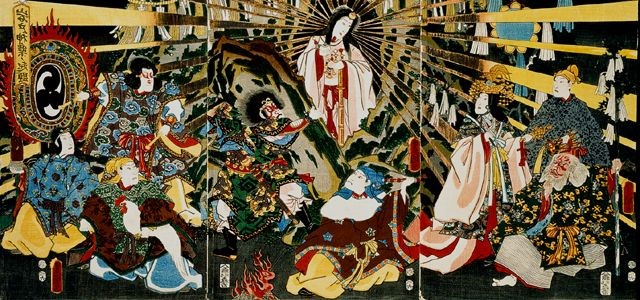
Growth and Development of the I

I appreciate everyone participating in this new format and welcome to everyone coming for the first time.  We are working to keep our regular class schedule going so it will be easier to return to our training together.

Please share any comments, suggestions or questions.

This difficult time; while we wish it was not going on, is an opportunity to deepen our practice by appreciating what is really important to us and what we can let go of. –The Art of Aikido Kisshomaru Ueshiba translated by John Stevens (pgs. 77-79). 

Introduction

In our last on-line class we returned to our work with forging.  We expanded the focus to include forging in manifest and hidden dimensions of consciousness. 

Our goal with this series of classes was to deepen both our understanding and experience of the forging process and its benefits.

Today we are starting a series of classes on the growth and development of the I.  Our goal in this series of classes is to focus on a direct experience of the growth potential of the I.  We will explore the growth potential of the I from our starting point at level 1 in two ways. 

First, is to work to improve the balance and integration of the I at level 1.  This is important because we want to avoid the growth of an unbalanced I.  As the I grows to deeper and fuller levels its capabilities also grow.  In an unbalanced I this increases the potential for greater levels of entanglement with resulting downstream problems.  The potential for greater levels of entanglement occur because of an increase in both the internal conflicts within the I and greater and more powerful kinds of interference by the I with other parts of the system.

Second, are the growth opportunities to move from the level 1 I to increasingly refined levels of the I.  These changes are so profound that we may want to change the name from I to soul; true self; atman; supreme identity or as O Sensei called it the most original self.  He regarded the most original self as the consciousness present even before the beginning of creation. 

In our class today we will use the Aikido technique katate-dori kokyu nage as our technique.    

Let’s bow in and start with misogi breathing and a good full warm-up.
Our tip today on the misogi breathing is during the exhalation visualize exhaling all negativity from your system.  Then visualize inhaling a sense of freshness, health and wholeness and seeing that spread throughout your body, mind and spirit. 

Five Principles for Ki Breathing

  1. Breathe out with the sound of HA, don’t let your breath just leak out
  2. Breathe out as calmly and quietly as possible
  3. Breathe out the Ki of your head to the Ki of your toes
  4. Breathe in from the tip of your nose until your body is full of air
  5. Calm your mind infinitely smaller at the one point after inhaling

 Working With the Level 1 I or Starting Place

Accepting Our Starting Place

It is important to accept our starting place and even to honor it.  Our level 1 I deserves that respect because it got us to the place where we can begin to train.  Acceptance of our level 1 I also helps to reduce the amount of entanglement at the beginning of our practice session and life in general.  Virtually all the great spiritual traditions tell us we need to transcend the ego.  It is certainly true we want to grow beyond our starting place when we are ready to do so.  But starting out with a negative judgmental attitude toward our starting place increases the difficulty in beginning that desired process of transcendence.  Acceptance doesn’t mean we turn away from our efforts to grow and develop.  It does mean we are trying to avoid unnecessary entanglement as we begin our practice.

Before we begin our work with the level 1 I let’s do a round of practice with the technique. 

1 Begin with a round of practice of katate-dori kokyu nage both uke and nage.


Get feedback on the technique to establish a baseline to be used for comparison as the practice progresses.

The “I”

The “I” is the part of our system that is the center of our sense of personal identity.  Regardless of which unit is currently in play; which call-off we are working on; or in which space-we are still “I”.  One possible analogy is that the unit is the clothing and “I” is the body.  The I is present regardless of the clothing currently being worn.

It is difficult to get away from describing practice in terms that don’t reference the body.  But the body is not part of the “I”.  The body is of the Unit.  The “I” exists in a way that is independent of the Unit because it exists regardless of the unit in play or even if there is no unit at all.

The “I” has two parts, one is the more awareness oriented part of the “I”.  The awareness part of the “I” spends most of its time looking outward.  This outward focus allows the system to be aware of activities in the creation especially those that relate to the unit.  Our shorthand name for the awareness part of the I is the mind of I.   The second part of the I is the more experiential feeling part.  The feeling part has a more inward focus.  Our shorthand name for the experiential part of the I is the body of I.

  1. We can work with the experience of I to improve our balance and integration. One way to approach this is mirroring.  This reflective orientation has both a physical and value oriented aspect.  The physical one is related to health, safety and other areas of importance to the overall system, such as detecting possible threats or desirable events.  The value oriented aspect looks at outside events in terms of satisfaction or dissatisfaction.  I like this; I don’t like that.  I don’t want that; I want more of that.  You can provide the details here with your preferences and dislikes.

A mirror is one of the three parts of the Imperial Regalia that was provided to first Japanese Emperor by the Sun Goddess, Amaterasu according to the Kojiki.

The Kojiki (Record of Ancient Matters) is the primary creation scripture of Japan.  It was compiled between 682 and 712 AD.    

O Sensei was a lifelong student of the Kojiki.  One of the stories he referred to the most often was when the Sun Goddess, Amaterasu retired into a cave behind an immovable rock or stone door because the Storm God Susano destroyed her rice fields. (See the Univ. of Tokyo Press translation of the Kojiki by Donald L. Philippi pg. 81) 

This plunged the world into cold and darkness.  The other gods and goddesses in an effort to lure her out of the cave and return light and warmth to the world, convinced one of the goddess to dance in front of the cave creating a great uproar.  This piqued Amaterasu’s curiosity and she moved the stone door aside a crack to see what was causing the uproar.  When she moved aside the stone door she saw herself reflected in a mirror the other gods had hung from a tree.  This surprising image encouraged her to open the stone door further and further so she could see more of herself.  Eventually she came out of the cave as she experienced herself more fully (seeing her true self) and restored light and warmth to the world.  Below is a painting depicting her coming out of the cave.

O Sensei compared the creation of Aikido to the second opening of the stone door.  Here is a poem he wrote about it.

Amid three thousand worlds 
a single plum flower
blooms-
the stone door will
open a second time.

Although ideas expressed in this doka are derived from Shinto mythology (Kojiki Book One Chapter 17) and Omotokyo beliefs, in Morihei’s idiom it means:  “Aikido, a rare flower now in bloom throughout the universe, gives us the means to open the stone door of darkness and ignorance; through the combined efforts of good people everywhere the polluted world of death and destruction will be bathed once more in the sunbeams of truth and beauty.”  The plum blossom is a symbol of resurrection and renewal, and it blooms wherever Aikido is truly practiced.  (The Essence of Aikido by John Stevens, page 59)

We are using the mirroring capability of the awareness part of the “I”, the mind of “I” by turning this mirroring capability inward.  This is in the spirit of the story in Kojiki because what restored the light and warmth to the world was the Sun Goddess seeing her true and complete reflection.

The mirroring ability of the mind of “I” is turned inward on its other half, the more feeling part of the “I” we call the body of “I”.   At this point in the practice our goal is to allow an image of the body of “I” to form in the mirroring mind of “I”.  The clearer this mental image is the more successful the rest of the practice will be. 

  1. Practice the first part of mirroring as the mind of I mirrors the body of I. What is the mirrored image of the body of I?

Once a clear image of the more experiential part of the “I”, the body of “I” has formed, the practice continues by shifting the focus to the body of “I”.   

It is a good idea to take a moment or two to allow this shift to occur.  It is fundamentally a shift in perspective from thinking or awareness to feeling, both of which are key parts of our system necessary for healthy functionality.  Functionality that is healthier in the sense that we can go through our lives with less internal conflict.  It also helps us get better at noticing internal conflict and working to resolve it more effectively.

One way to determine that the shift from the mind of “I” to the body of “I” has occurred is to notice the difference in feeling.  Usually, the body of “I” is quieter, with less mental background noise and a more steady grounded experience. 

  1. Next is to follow the same process as the one we did with the mind of “I”, by having the body of “I” mirror the mind of “I”. The experience of the body of “I” mirroring the mind of “I” may be different than the mind of “I” mirroring its counterpart.  This is due to the inherent difference between awareness or thinking and feeling or more direct experiencing.

The two parts of the “I” are reaching out to each other achieving greater alignment, integration and wholeness.  This wholeness of the “I” is crucial because it helps to reduce the level of internal conflict within the system. 

If there is difficulty in bringing the thinking and feeling parts of our system together highlighting that problem and bringing it to a more conscious awareness is very valuable because we can work to address the split in our system between thinking and feeling.  This split can be a source of frustration because it inhibits healthy functionality and enjoyment of life.  You can see in this painting by Van Gogh how strong the heavenly energies are and how truncated the earthly ones are.

So at this point let’s ask the question of both parts of the I, what is working well in our relationship and what would we like more of.   Experiencing wholeness of the “I” is an important check point before we begin to work toward deeper/fuller levels of I.  The question of when the experience of wholeness is good enough to move on is an important one.  While it is a subjective judgement, one simple approach is to say out loud, even if you are practicing alone, the answer to the question about the relationship each part of the I has with the other.  If it is difficult to formulate the statement or the experience of wholeness doesn’t seem to improve, then more time with the level 1 I may be needed.

  1. Let’s now go back to the technique and see if the more whole I practice we did is reflected in improved performance and satisfaction as you go through some repetitions. The technique is also a good form of feedback about whether we are ready to begin the process of moving to the level 2 I.
  • Get feedback on the technique, if there is an improved level of performance.

Conclusion

We have begun the process of development from a level 1 I to the deeper/fuller levels of I.  The starting point is to work with the level 1 I, so we can engage in the process of growth from a starting point of balance and integration.  This can help us to avoid magnifying internal conflicts as we achieve greater levels of personal power and broader interaction.  It is generally far easier to work to resolve inner conflict and related issues at level 1 than later in the process of growth.

Feedback and discussion.

Practice before next class:

Aikido and the Harmony of Nature by Mitsugi Saotome (pg. 183).

Finish with misogi breathing and bowing out.